About Jonathan Paul Parker
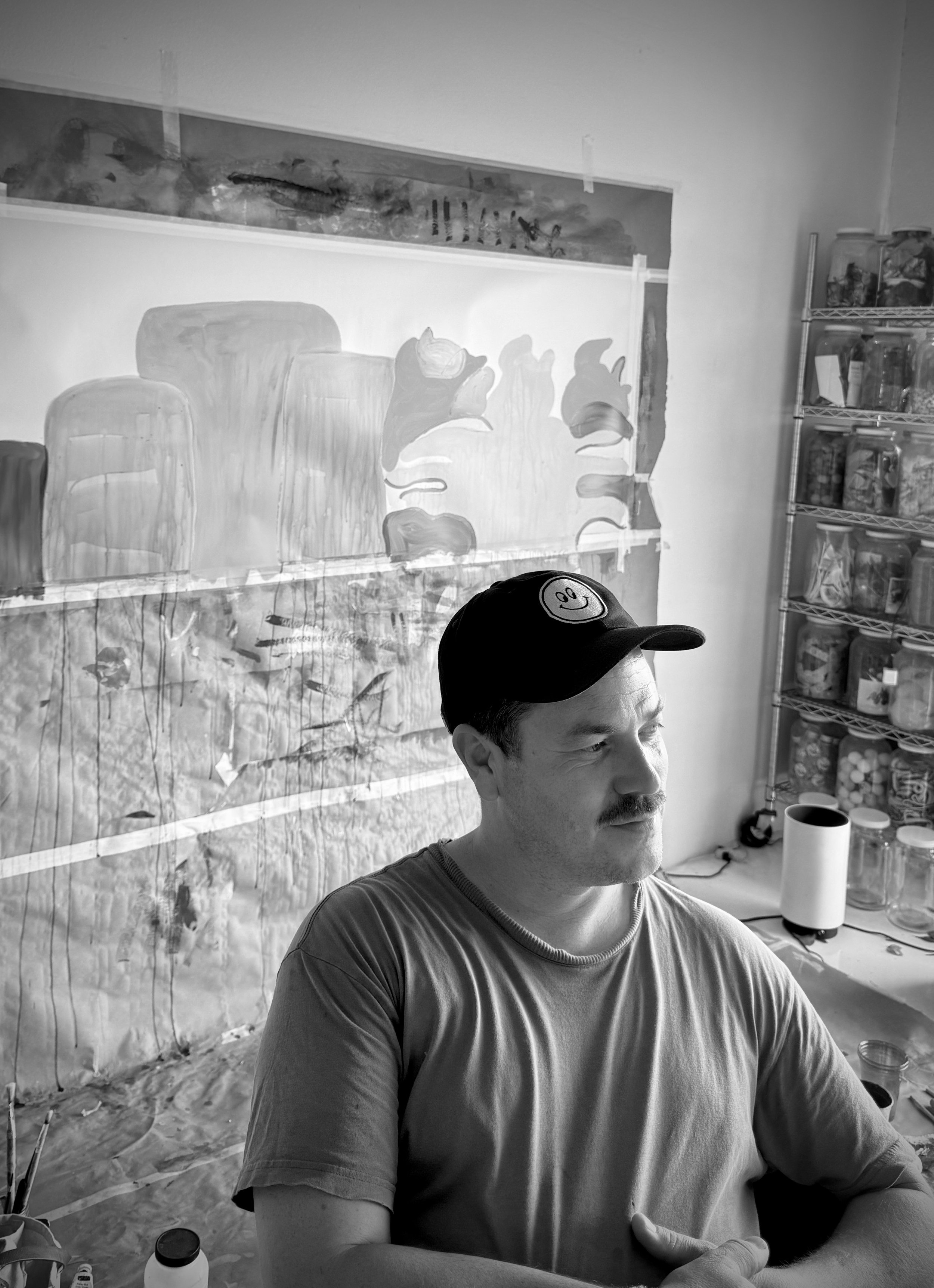
My paintings explore the space between what is visible and what is sensed. Color, gesture, and rhythm become ways of entering the imagination and the unconscious. I approach my canvases as mirrors and receptive surfaces, allowing intuitive and archetypal forms to appear through patient, attentive looking. At the center of my practice is a form of active imagination inspired by Carl Jung, in which inner images and impulses rise into awareness and help guide the direction of the work.
I began as a draftsman, and years of drawing sharpened my sensitivity to line, rhythm, and composition. This foundation continues to shape my painting practice. I often experience the canvas as something that reveals itself slowly, almost like photographic paper developing in front of me. Marks and color fields arise out of quiet attention, turning each painting into a record of consciousness in motion.
My early involvement with experimental film, video, and improvisational music also plays a role in how I work. Performing with ensembles that used the body and found objects taught me to respond instinctively to rhythm, texture, and chance. In my paintings, a single mark can function like a note, and a composition can unfold the way a musical score does, moving between spontaneity and structure.
Across two decades, I have shaped a visual language that balances openness with intention. Revision is a key part of this process. I edit, erase, and rework until the image finds its own clarity while still holding onto its immediacy. My practice draws from the histories of automatism, Abstract Expressionism, and spiritual abstraction, yet remains grounded in mindfulness, material presence, and embodied awareness.
My paintings invite viewers to slow down and enter a more attentive state. Through color, form, and movement, the work offers a quiet space for reflection, where perception and inner experience meet and shift. Each painting becomes a conversation between psyche, image, and material.